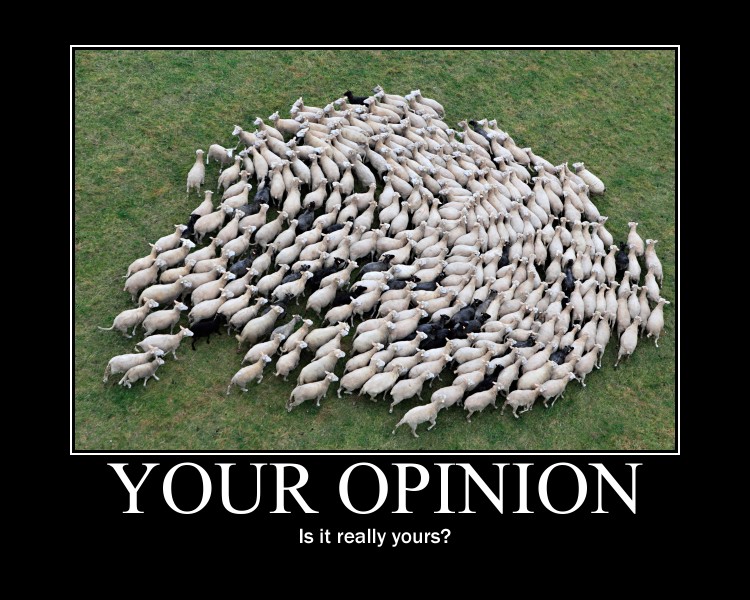
Motivational Poster

Motivational Poster

WELCOME TO THE COLLECTIVE THOUGHTS OF THOSE WHO CURSE THE STUPID AND DAMN THE MALEVOLENT


Wednesday, February 20, 2019

Arse-Kissing By Any Other Name


Arse-kissing

Brown-nosing

Chair-sniffing

Pandering

Greasing-up

Blowing smoke up their butt

Flattering

Ego-waxing

Sycophancy. We've all seen or partaken of the behaviour these gerunds signify.

Some of us have received it.

What is Sycophancy? What is it, really?


It's seeking the favour of someone, for some personal good outcome, by denigrating oneself or another in comparison, or by exgerrating on, or falesly attributing to, the object's character, reputation, decision, view or acheivement, whilst seeming to believe in their statement whether believed or not.

It can be issue-specific and therefore temporary, or it can be the consistent state of the relationship.

For witnesses, or even the subject and object, it can create a feeling of sickness or disgust.

It is a complex system of lies and withholding of the truth:

- hiding the real goal of the behaviour
- lying about some or all of the statement made
- hiding the true opinion the subject has of the object
- it attempts to hide the closely-held strategic intent of the performer
- it presumes a level of superiority in the object that may not be real
- it distracts from an honest development of the issue previously being discussed
- it reflects some now exposed view or character of the performer

For witnesses, there may be a strong compulsion to call it out.

Those performing the behaviour are often mocked or reprimanded.


It is often easily recognisable, making it a risky exercise clearly worthy to perform and thus the goal must be high-value and worth the risk.

The behaviour is contrasted against praise, diplomacy, tact, admiration, commendation, where a hidden personal good is not sought, but that of a goal to some common interest whereby a strength or positive aspect is identified.

If it be shown that this former behaviour of sycophancy is harmful for no common good, then rational discussion is demanded in order it can be mitigated or annihilated.

The executioners of such mitigation or annihilation, as always in the war against wankers and idiots,  can only be those with courage and vision.

So, is it harmful, to what extent, and is it then justified?

Sycophancy, or arse-licking, is a behaviour that seeks to gain an unfair advantage, by achieving a status of being favoured amongst a group.

Thus, the first harm is that sycophancy that achieves its goal is unfair. Instead of favour by merit, there is favour by fraud.

The harms consequential of unfairness, such as getting a head start in a race etc, should not need to be enumerated, as anyone who has witnessed such unfairness can attest.

If it is accepted that unfairness should be mitigated, brought back to balance, wherever it is found, then one must also accept that sycophancy be treated the same.

Extent cannot be a property of unfairness, as all degrees of unfairness have the same value: a little unfairness is in need of rebalance, just as a large unfairness.

Then, is the harm of unfairness from sycophancy justified?

In extreme cases, where lives are in danger, such as between Nazi German POW staff and their Jewish prisoners. Here, sycophancy is justified where a person's life is decided by the behaviour.

However, outside such extremes, as feigning sycophancy to preserve life, in the conduct of everyday modern Western life, there is no justification.

What other harm avails itself?

Sycophancy attributes traits and reckonings of such high calibre to a person, whom has them not.

This falsity causes in all members involded further harmful falsities:

The object of sycophancy is encouraged that their judgment is indeed accurate, good, correct, and may continue an erroneous course of actions on that basis.

Further, witnesses to the sycophancy, having been equally fooled, themselves continue a course of action inspired by the object that is also just as erroneous.

It is assumed for sake of argument that wrongly inspired courses of action are likely to lead to harmful conclusions. QED.

A third harm, may be argued in general, being the standard harm caused by all manner of deception when such is fundamental within a group of people working together for a common goal.

When an organisation of people is infiltrated by institutional deception, such as sycophancy, a culture will develop naturally that has at its root the covering of truths. It is assumed such a fundamental framework based on deception is likely to become toxic and undermine the goals personal and communal of that organisation.

A fourth harm relates to respect and reputation. The witnessing of sycophancy, where it is thinly veiled, has a proportional effect on the respect and reputation of both subject and object.

For savvy witnesses, the respect and reputation of both parties plummets, albeit by different means.

The gullable recipient of sycophancy has their personal value diminshed for being so blind, vane and naive.

The sycophant has their value diminished in the eyes of their peers witnessing, by their having used fraud and deception to successfully compete against them. Further, it is obvious to such peers that the sycophant intends to compete with them and acheive a favour or advantage over them, by immoral and anti-social means.

The sycophant has thrown down the gauntlet at the feet of their peers, unashamedly, unapologetically.

Further harm is consequent from the suspicion amongst peers that the sycophant may be colluding with one or more of them, thus creating a sense of mistrust and the consequent harms that follow such in any group proclaiming to work together for the common good.

A final harm is the opinion now held by the subject of sycophancy, of the peers against the sycophant. Favour is relative, so the favour of the sycophant having been won, requires the favour of the remaining peers to be relatively diminished, along with their advice and counsel.

Thus far, We have shown the harms created by sycophancy. They are deep and wide, they are self-perpetuating and self-justifying. To this extent, the sycophant must be stopped.

But how?

Calling out behaviour is risky.

Evidence will be required. Yet the sycophant only succeeds after ensuring that evidence is unattainable.

The annihilation of sycophancy can only be acheived by the object valuing the views of many against a favoured one.

The value of a group can only be achieved by the group itself developing its value in the eyes of the object.

Once this is attained, a class action calling out the sycophant will be treated with respect by the object, who is likely to second-guess the sycophant from then on.

Best of luck!


Thursday, February 14, 2019

The Vast Majority of Muslims are Good, but...

The vast majority of Muslims are good. The trouble we're having is with Islamists, who impose Islam upon others and who aim to create a Caliphate with Sharia Law, either outside their host country or within the host country. The means to achieve the Caliphate includes "terrorism", or the killing of innocents.

But we shoudn't leave the good Muslims alone. They have a role to play with Islamists.

The "other" Muslims also cannot shelter behind their "correct" version of Islam, blaming Muslim atrocities on a minority of Muslims holding an "incorrect" version.

This argument from Muslim apologists is the fact that the things Westerners find atrocious in the Islamic culture, behaviour, prectises, beliefs, are the peculiarity of only a small misguided minority.

Sadly, this is not the case. They are both peculiarities of Islam, as a whole. What both views share is a common religion at the fundamental level.

The horrific behaviours seen of some members of Muslim immigrants or their progeny may seem part of a minority group, but their "warped" behaviours derive from their understanding of their ethnic group's "religion". Bad Islam comes from good Islam.

Genital mutilation, child marriage, honour killing, racism, cruel animal slaughter, bigamy, the killing of apostates, killing civilians for represnting a perceived enemy, are all the features of certain organised ethno-religious groups, NOT an individual's personal belief, nor all ehtno-religious groups.

It is enough that certain behaviours derive only from some groups that the group itself is partly to blame.

No Islamist terrorist derives their beliefs outside the Islamic religion they follow.

Mainstream religions are partly responsible for the relatively wayward interpretations of some members, by not clarifying for all members the true or correct interpretation.

If a religion promotes the supremacy of religious belief above reason, there should be no surprise when irrational interpretations of jihad produce mass killing of civilians.

It should be clear to clerics and ideologists that an ambiguous teaching may yield a violent interpretation. The solution is clearly to define the teaching, its scope and limitations.

This clarity does not happen.

Mainstream religious members feel they can sit back and relax that they simply have the correct interpretation and hold no responsibility for the actions of other members, who got it wrong.

In this sense, there seems to be more than one Islam. But Muslims disagree. Both are wrong. There are many interpretations of ONE religion. Some argue, but mine is the correct one. The trouble is, they all say that. So which one is right? They are both correct.

Muslim apologists continue to claim there's is the correct interpretation, so their religion is not the problem.

Problem solved?


Political Correctness Kills

Political correctness, we argue, is used by a movement of people whose combined global efforts have protected and supported another movement whose activities have included, as one of their goals, the killing of innocent civilians.

So what do We mean by political correctness and how has this behaviour lead to killing?

Political correctness is the reaction against bigotry that has recently existed in government policies, workplace behaviour and individual attacks against minorities, especially the vulnerable and the voiceless.

This reaction includes banning, vilifying and punishing bigoted behaviour, but also has extended to behaviour of a special kind believed to be harmful, mostly psychologically, to some groups. The reaction also seeks to support false concepts about humanity and society that aim to promote attitudes, beliefs and principles of social cohesion that in turn free up a range of behaviour that culminates in killing.

Examples of these false concepts are multiculturalism and tolerance of certain vulnerable minorities, especially immigrants, gays, women and religious groups. Other false concepts include, that some opinions or beliefs are empirically or logically wrong, and some beliefs are morally wrong. Further, a false concept includes the position that discussions that hurt people's feelings are not only morally wrong, but illogical or irrational.

Basically, political correctness has caused certain discussions and behaviours by governments, interest groups and individuals to be ceased that would otherwise be free to examine the global movement of killers, concluding in action against them.

Political correctness therefore stops examination and critical discussion of certain subjects before they can start. Because the issues are never discussed, they are never addressed, and where the issue is the killing of civilians, political correctness plays a vital role in the freedom of violent actors to continue unimpeded with their plans to kill.

It should be obvious then that part of the solution to defeating terrorism, radicalisation and the killing of civilians as a political tool, is to defeat political correctness.

Serious discussions and policies that aim to identify and destroy the organised killing of civilians for political motives must be allowed to continue and develop unimpeded by a reaction against the potential harm that such discussions and policies could inflict upon the feelings or sensitivities of some people.

Concurrently, the false concepts that political correctness creates to justify its reaction need themsleves to be exposed as false concepts invented not out of rational argument, but purely to appear as good reason to stop a discussion that opposes their view.

Bigoted statements can be defeated through discussion, including logical and empirical tests that would defeat them rationally.

Political correctness claims to be used to protect everyone from harm. Conversely, it enables those bent on harm, protects them and even supports them by giving them freedom from criticism and investigation.


Sunday, February 3, 2019

The Fallacy of Arguing for All or Nothing

Not all of a group committed the act, therefore the group as a whole is not a problem, just the uncharacteristic minority.

The group does not represent the act, only because not all members are predicated by the act, so the concern is a generalisation and therefore incorrect.

This is a common counter-argument in debate against those who identify a theme or pattern amongst a group. The counter-argument is to point out the minorism or generalisation and that these are invalid as they argue from particular to universal.

The point of the counter-arguer is to negate the need to discuss an issue, because it seeks to convert a minority to a generality or a wholistic statement.

The logical format of the argument for Minorism - Some is Important - can be stated as, some X does/predicates Y, therefore Y is a predicate of X whether minor or not.

The complaint by anti-minoritists and anti-generalists is their demand for something to be a true  predicate, then All members need to have the predicate proposed, not just some or even many, or most as in the generlisation. If All do not have the predicate then the proposal is wrong.

So, someone notices how MOST terrorist attacks are committed by Muslims and argues therefore that there is a problem in Islam to discuss. But before we can proceed, the counter argument is made, "Not all Muslims commit terrorist attacks, therefore there is no problem in Islam. And by the way, you're being racist in even suggesting it.

Many arguments fail to proceed due to this premature cut-off at the minorism or even the generalisation. So that's a problem in need of solution. It's a problem, because the issue isn't discussed beyond the first statement.

We get it.

Not all X do Y. But that's why it's called a "generalisation" or "minorism". Conversely, some argue that if so many of X do Y, there is clearly a problem within X.

Why is it so bad, so wrong, to argue that because most or not all X does Y, we have something significant to discuss and resolve?

Not ALL catholic clergy are pedophiles, but that hasn't stopped a Royal Commission into the Catholic Church and similar formal inquiries across thre globe.

The generalisation was made that so many in the Catholic clergy commit, support and protect paedophile crimes a theme is apparent that demonstrates a causal relation between the church and the crime. This relation has found to be the vulnerability of children in adult care, combined with a sexual desire pervasive among clergy, combined with the power of the church to cover these acts up.

It should not matter that out of 1000 people, 1 person is Y. The minority behaviour or condition is important and should not be ignored because a majority are not Y.

We need to turn this knee-jerk reaction against generalisations around, this attitude that the minority or even majority of a thing does not matter.

Generalisations are made for a reason and are part of how we judge action, value, response. Generalisations help. They identify a trend, a weakness or strength, a tendancy, a strategic issue.

The majority matters.

The majority is how groups are elected, how consumer products are sold on the market and those in the minority are removed, how we decide on whether to visit a place based on reviews.

The majority is how groups decide on what action to take, what policy to hold. It is at the heart of democracy. The majority rules in most decision-making groups.

Not all ethnic groups share the same physical appearance (skin colour, eye shape etc) but we all generalise and use terms like White People, Asians, Blacks, Arabs based on the generalisation that most members of an ethnicity share physical appearance. We do this because it's helpful and it works.

So, why are we always defeated in argument simply because there is a minority that don't fit the proposal, the observation?

Why in important areas of life does the majority rule and become accepted, but in other areas the demand is for total inclusion, not just majority, before the argument can proceed.

If most people in group A behave with type X, we are told we cannot draw any conclusion, design actions, solutions, change or modify policies?

The Law, politics, voting systems disagree; all of these change and modify due to a majority, and do not remain unchanged because one issue falls outside the majority.

We are all treated by the Law, by Tax rules and regulations based on the conclusion by governments that the majority of people behave a certain way.

Not everyone drives, but most do, so we have roads and road rules.

Not everyone in the UK can read English, but most do, so school teachers, signs and forms use English.

Not everyone likes garlic bread at pizza restaurants, but guess what's on the menu?

Most people are not allergic to codeine, but guess what you're given for pain by medical staff (assuming they ask you about your allergies first).

Without generalisations, imagine how difficult your life would be.

You could not SAY certain things anymore:

Politicians lie.

Life is difficult.

Marriage is hard.

I like sausages.

Christians believe in forgiveness.

Melbourne is the best city to live in.

I'm a friendly person.

I'm good at my job.

So, you are reduced to mitigating the sentiment behind these kinds of generalisations:

Sometimes I love you.

Human beings sometimes have legs.

Some restaurants serve food.

Some cars have wheels.

How ridiculous and impractical.

Generalisations should be contrasted to vague statements, such as "We teach an open minded religious instruction in our school."

What the hell does that mean?

A generalisation is not vague, like this. A generalisation summarises a theme shared between multiple issues. It says, "I have noticed that this group shares this in common, not wholly, but in large numbers; large enough to establish a theme so that we can predict the character of other members of that group.

In general, male homosexuals use a lisp in their speech. This is a commonly observed characteristic particularly apparent in a large number of homosexual men, as opposed to the minority of this in non-homosexual males. Therefore, we have the generalisation that male homosexuals speak with a lisp.

When we hear a lisp we can predict a likelihood of homosexuality. This is empirically verifiable.

Generalisations are what most of our positions on the world are to us.

Get over it!

Minorities mean something too.

Peadophiles are a minority, but we treat it with serious action. We don't wait for all humans to become paedophiles before we act against it.


Wednesday, January 30, 2019

The TV News Reports but Never Follows Up

Have you noticed that the TV news media report the news, but never follow it up, never offer advice or lessons to learn from what happened?

Example:

TV news media report deaths and injuries from traffic accidents. But they don't report Why it happened, and How we can avoid the same tragedy.

Why?

If it's in the national interest to report a harm, is it not even more important for the national interest to learn why the harm happened, so we can avoid the harm ourselves?

Who is responsible for following up on things? The Government? The Media?

Who cares?

If you decide to report something and decide not to follow it up, then you are responsible for the omission.

Reporting something and not analysing it for the benefit of those reported to is lazy and irresponsible. The true reason for the report becomes evident: to get ratings to sell their TV time to advertisers. The TV news media prove they have no interest in public safety, public awareness by merely reporting shocking events. They seek only to sell their product, to make money. This is disgusting behaviour.

The TV news is conveyed to us in the same format; decades of the exact same method. The TV news media has not progressed or developed its service one iota since it began decades ago.

The leading and lagging national economic indicators are merely displayed as numbers in the finance section. But no media has ever explained these indicators, why they should mean something to all of us - not just rich investors or political actors.

Gold and oil prices are displayed to the nation, but why they are displayed is never explained and remains a mystery to most watching. What do these figures mean or matter? No one explains.

Stock prices are displayed, and never explained. So why display them?

Employment figures are displayed, but the figures are not enumerated into their categories: part-time, casual and temporary employment figures. Why not?

It makes a difference in viewing employment figures whether they are mostly full-time ongoing jobs or merely casual or part-time (2 hours a week?) jobs. The differences are immense. But no enumeration is forthcoming.

Why not?

What most people want to know day to day is how are we all doing? How are others doing? How does this news affect me? The Media choses not to tell us.

We clearly have a gap of need in society and the need for intelligent analysed information. Since the Media and the Government have no interest to fill this information gap, someone needs to step up and fill it.


Arguing is Wrong?

For time immemorial, it has been a lazy and fallacious argument to rebutt with the terms that the argument itself is not worthy of the products expected.

Today, the lazy arguer in public discourse will defer upon recognition of impending defeat that the nature of the argument is not worth continuing.

In raw terms, a person will stop the argument stating that "You are getting aggressive.", "You are being argumentative.", "You are being negative.", "You are denigrating my feelings or beliefs." etc.

This is a cheap way to end one's involvement in a rational argument. Like kicking the chess board when you realise you are about to lose, or picking up the ball and walking home because you are losing the game.

Samuel Johnson said "Prejudice, not being formed by reason, cannot be argued away through reason."

This explains some of the reason for arguments being ceased by the losing side.

Today, it is common place due to Political Correctness that an argument will be ceased by one side based on the negative nature of the argument. PC reminds us that an argument must never offend one side.

Of course, the most important of all arguments will likely come with prejudice, a dearly held belief, a sensitive ego and the potential to offend. This fact of the sensitivity some views hold is the very reason they need to be argued out. Things that hold none of these sensitivities are not worth arguing about.

The questioning of beliefs, of arguments, of claims of fact, demand by their very nature a critical examination to confirm or deny the weight of their claims to truth, certainty or importance.

If the findings of the examination look set to erode the sensitivities of one side, that side will cut the argument short. Thus the issue is not progressed. Scientific discovery could not have proceeded with this sensitivity and behaviour.

David Hume had a simple test: does it contain not number nor tautology nor statement of some fact? Commit it then to the flames.

Hume cuts off at the knees anything claimed that cannot be tested by logic or empirical verification.

Anything else is likely nonsense. Hume is interested in what can be known, what is true, what is certain or verifiable.

However, an argument often seeks more than the truth. There are reasons beyond truth to argue. An argument is used to convince, to persuade, to correct, by identifying more information, a flaw in reasoning or method, an inconsistency. An argument can enumerate the logic of an argument and why it is held, why it was concluded, from where it derived.

This is why argument with even seemingly irrational persons is so important.

Today, we are taught not to argue. Today argument is a dirty word and no sooner has it begun than one side calls for it to end. This is an effect of PC. The argument by its nature will require the dismantling of close-held beliefs, of ego. Feelings will be hurt. Beliefs will be attacked. Ego will be exposed and weakened.

We all need to grow a thicker skin and stand up for what we argue, rather than folding like a cheap suit when we are criticised rationally.

All argument is good. All argument and dispute and disagreement is necessary to progress beyond the caveman.

The costs of arguing are outweighed by the benefits of enlightened, unmolested exchange of reasoning.

We are our own worst critics, so it is left to others to point out our shortcomings in reasoning.

This can only happen in argument, no matter how much it hurts.


Tuesday, January 8, 2019

South Sudanese Gangs


The reports in the Australian media the last few years on South Sudanese "Gangs", or more accurately pack-like mob behaviour of young male South Sudanese committing violent crimes, especially car-jackings, street fights, home invasions, burglary, rioting and if the police are brave enough to intervene, violent resistance to arrest, identifies a nascent local phenomenon of complex social issues and thus becomes a target for analysis.


This phenomenon conflating race, immigration, crime and terror is widely debated in the public, media, politics and academia and therefore needs the attention that all such debates need: open rational and courageous intellectual analysis and discussion.

The first argument from the Left, from politicians, from the courts and paradoxically the media is that "there is no problem"; there are no Gangs.

What they mean is, the Rightist media and the racist bigots sector has blown this phenomenon out of proportion, misunderstood it. The attacks and crimes committed by these groups is a tiny fraction of overall similar crimes and attacks committed by Joe Public.

As if that makes it all better.


A second argument is that the term "gang" is incorrect. A gang is an established organisation of people sharing a common goal and often using violence and crime against the public and authorities to achieve that goal. A gang has a leadership, a structure, a strategy and is in it for the long-term.

The Left argues that these groups do not meet these criteria. Instead, they are disorganised transient random groups joining together for opportunities to thieve and have fun. Typical youth having a bit of fun.

A third argument is that the negative commentary from the general public about South Sudanese Gangs reveals an abhorent un-Australian racism against "black people" and immigrants that needs to be stopped and corrected, so we can all live in a harmonious and tolerant multi-cultural society.

Identifying these actors as a new phenomenon of third world disgruntled migrants ganging up against their Western hosts is seen as racist, bigotted and in need of re-education.


Thus, with these three arguments being true, there is no problem to debate, the actions of the groups are harmless or too minor to worry about or even discuss, and if you disagree you are racist.

These arguments end up protecting the actions of these groups, and give them support to continue their activities. The groups themselves have tested the public, the courts and the police and have found little resistence, little punishment or vilification and even some support. Anyone who sees what they're really doing and speaks out will be targeted as racist.

That must be very encouraging for them.

As with all important debates, one side tries to shut the other down through ad hominem, the fallacy of arguing by authority, and charges of breaches against the sanctity of political correctness.

This is unfortunately a sign of the times. We live in the age of "if you hurt my feelings, I will shut you down, and the law and Leftists will have my back."


So, what are the rebuttals to the arguments above?

What is the problem and what is the solution?

Only a rational, honest, courageous debate will answer these questions and check the validity of the  debate-halting arguments.

The first argument uses criminal statistics to show these groups are in a tiny minority of offenders on particular crimes identified in the media.

The argument then concludes that because the groups and their crimes are a tiny minority, there is no cause for public concern or fear, or for political, judicial or policing changes than already exists.

Police have been reported to have said to victims and concerned citizens simply to stay indoors.

This argument that quantity is more important than quality assumes the public only care about quantity and not quality. That argument contradicts public feeling.

It has been found globally since 911 that citizens care more about the quality of the crimes than the quantity. More people die in car accidents per year in any given Western city, than by being kidnapped and beheaded or blown to bits. However, ask anyone what scares them most.

The second argument is the term "gang" being misused. Well, as Bertrand Russell once said, wherever possible in serious debate, replace Names with their Descriptions. So the second argument is moot, once the terms are dropped and we starting describing what's happening.

The third argument is a modern day defence of any arguer against an opponent: you're racist, you're being politically incorrect, therefore your argument has no validity.

This argument is neutralised by the counter-argument, "So you are against freedom of speech."

So, the solutions to the problem of South Sudanese Gangs must begin with open discussion. This is normally where such arguments fail to proceed, as one side is shut down.

Once a motive for the activities is determined, we can move to mitigating them and preventing them.

Better integration programmes can be employed, tailored to address immigrant disgruntlement and a range of deterents, such deportation, jail, targeted police raids etc can be designed.

Ignoring the problem does not make it go away. While we're all fighting amongst each other about the nature of the problem, the problem is growing and will transform into something much worse.


Sunday, January 6, 2019

Multi-Culturalism or Racist Ghettos?


The term Multi-cultural is proudly bandied about in cliché fashion, by the opiated masses to describe what they insist we must all seek in our modern, good, tolerant societies. The apparently self-evident, endlessly benficial aspiration all modern Western countries must strive for in hosting immigrants: an idyllic, eclectic society of societies, under the paradoxical banners, "We are one, but we are many", "We are the same but different", a society fully integrated yet concurrently needing to be tolerant, a society of "cultures" living together, but not actually together, in a beautiful catatonia-inducing harmony.

The assumptions are impressive: different "cultures" always compliment each other; a multi-cultural society is the best society; a multi-cultural sociey is harmonious; there is no alternative but death and racism; racism is not a feature of a multi-cultural society; there is little to worry about with multi-culturalism; multi-culturalism is good for individualism and can accommodate or compliment all the various types of "cultures" (We call these "ethnosities" rather than "cultures", as "culture" entails growth, development, evolution and change, rather than tradition and conservatism); multi-culturalism is always acheivable, only impeded by racist bigots.

That's the talk. But what are the facts?

Look on the ground at these multi-cultural societies, these Ethnosities, and you will see something different from the rhetoric.

The "cultures" that move into their host countries are almost always from the third or developing world, particularly countries that have been torn apart by racist, religious, ethnic and cultural wars, intolerance and conflict; countries that have failed economically, socially, politically, ideologically. Countries that are either too young to have reconciled with, and transitioned into, modernity, or are too old to break with their barbaric dark-age traditions.

The "cultures" arriving on our desirable shores aim only to inhabit our wealthiest largest cities and then head straight from customs and immigration to the ghetto occupied by only their own kind.

These lucky people then proceed to segregate themselves by choice from their host cultures. No sooner have they borded the airport-city bus than they are met by their people; people from support groups that are set up to support and induct them and only them to their new home (our home).

These are the facts, verifiable by empirical evidence any moron can conduct by walking the streets.


Multi-culturalism on the ground is exclusively metropolitan and more accurately named Multi-Ghetto-ism. Thus anyone can visit, see for themselves, the various ethnic-based ghettoes that feature without deviation in all the world's Western capital and major cities. Their journey has been a time-travelling experience, skipping through the ages of human development into the future, from 7th century goat-herding deserts to 21st century Western civilisation.

Within these ghettoes, each "culture" creates effectively an exclusive community within a community. How integrated is that? Why do they do it?

The goals of multi-culturalism appear in stark contrast to what is seen on the ground: a group of people striving to create a ghetto of their own kind, separate from but living off its host community. Almost exclusively, these cultural ghettos feature only the societal aspects of their former homeland: their religion, their language, their food, their marital practises and ethical belief systems.

The kind of exclusions practised within these ghettos are racist by the very definition used by multi-culturalism advocates themselves:


As if this voluntary separation and exclusion weren't enough to contradict the tenets of multi-culturalist propaganda, these ghetto communities then go further to extend favour and opportunity to only members of their own culture. They hire people only from their culture, buy houses and businesses together, lend money to each other, send their children to schools only from their culture, marry within their own culture, shop at only their shops, let rental properties favouring tenants from or interests that serve their culture, starting small businesses that cater only to their culture, etc etc.

That behaviour is by definition the practise of racism. How ironic that the immigrants are more racist in practise than their hosts; hosts who accuses each other of racism, and the need for the host country to stop being racist.

There is even a common practise for older immigrants not bothering to learn the host language. They don't see the need. Why understand the host if you don't need to? One wonders whether they have any idea which country they're even living in, when there's so much separation between guest and host.

The mainstream public discussion of multi-culturalism is normally at best a bland, neutral one, at worst a self-congratulating, self-righteous utopianist one.

However, as with anything in this Age of Political Correctness, the hardest, most important, discussions are quickly aborted upon the hint of mentioning multi-culturalism might be bad, might be subject to criticism or critical analysis. Such philosophical proponents are vilified, labelled bigots, racists, morally corrupt.

So, fundamentally, there is one simple problem facing any critical, intellectual analysis or even discussion on multi-culturalism or ghetto communities or racism from immigrants:

People are not telling the truth.

People are lying about their true feelings, their true beliefs, their true rational conclusions.

Why?

Three reasons:

1) Ego:

Many people are powerless and insignificant, so they take up causes that can't lose and rave from the soap box their elevated morality, their superior intellect. Taking up a huge global cause makes them feel powerful, righteous, loved, admired, respected. It doesn't matter the cause, as long as it's got tonnes of support, especially in the online mainstream communities.

2)  Fear of Retribution:

Many people won't admit the truth, as they don't want to be vilified, accused of racism, or being attacked for inciting hatred or bigotry, and fear being killed for saying what they really think.

(how ironic: the discussion is racist, but the exclusive practises in the ghettos are not.)

This fear of offending is even solidified with the protection of people's feelings by the Law.

We are talking here about the decades old age of Political Correctness: you can't say anything offensive.

If you asked someone what they really thought about multi-culturalism or living side by side with different cultures, they would be too afraid to tell you the truth.

3) Propaganda:

If you asked different immigrant cultures why they segregate themselves within their host country, choosing to separate themselves from their host culture, they would lie for the same reasons, but in addition they want their culture to appear to be wonderful and harmless.

They will lie to keep up the facade that their culture is harmless and wonderful and tolerant.

So we've established that racism exists across the table, from the immigrants themselves against the host, not only from the host community.

So why is "Racism" (the practise of excluding people and favouring others based on their "race" defined nowadays as culture or ethnicity) so pervasive, globally and historically?

A fundamental truth ignored or feared in debate is the simple fact that people just don't like people who are different from them.

It's instinctive. It's a hard-wired survival instinct practised between and within all species, to preserve the species or sub-species. Fear of strangers is an animal and therefore human quality. It is not cultural or rational. It is not a mental disorder that can be cured. It is not a misguided opinion. It is raw instinct and the compulsion to express it is evidently less than most can bear.

However, there are rational practicalities to explain or justify this instinct. If you share nothing with another group or person, nothing shared in beliefs held most dearly, you cannot expect support, understanding or collaboration. You cannot expect empathy.

We are all drawn to people who share our dearly-held beliefs and understandings about the world, about how to treat people, how to live. You can't expect to maintain your cultural identity and the survival of your own culture, if it has to be compromised by accommodating another.

We are therefore drawn to those who look and behave like us, and equally, we are repelled from those who appear different. This compulsion is directly proportional to the level of difference. The more different you appear, the more repulsive you are. Think of dating websites that match people with people like them, people of similar interests, beliefs, backgrounds.

It's not right or wrong, bad or good, it just is. Look at the world, look at history. War and conflict is fundamentally caused by the repulsion between two groups. The preservation of one culture against dilution by another.

Then there is the resentment by the West of wasted effort.

Western societies spent centuries fighting, dying and suffering to preserve their hard one cultural evolution: the separation of church and state, the empowerment of women and vulnerable groups, the education of their children, especially their daughters, the equality between all, treatment of those with different sexual orientations and genders, treatment of animals.

What did our forefathers, our ancestors fight and die for? Our values, our beliefs, our evolution to modernity.

Many of the immigrant cultures come from countries that have not evolved their own beliefs and societal systems, laws and customs, from the dark ages of humanity we spent centuries escaping at great cost and sacrifice. Many people feel threatened by all this sacrifice and effort being wasted when a culture arrives that practises and even promotes those things we died getting rid of long ago. We're back at square one!

Therefore, there is a stark contrast between the fundamental beliefs and customs of host and guest cultures.


Other contrasted cultural behaviour can be quite patently antagonistic: e.g. the Muslim sacrificial ceremony and Halal practise of slitting the throats of cattle, in contrast to the Hindu protection and reverance of cattle. Thus, the splitting up of post British Raj India into Pakistan, Bangladesh and India.

There are many other irreoncilable practises between cultures living within the same society.

Arranged marriage, marriage of minors, treatment of women, kinds of punishment for crimes, genital mutilation, treatment of animals, influence of relgion in law and politics, dressing in public, shaking hands, covering woman in blankets, the list goes on.

Many claim to tolerate these differences and accuse others of intolerance.

Tolerance is a telling choice of word.

Tolerance becomes a poor indicator of the best kind of acceptance expected between different cultures. Why? Because tolerance in common usage means, "putting up with". Should we not progress from tolerance, if we are to integrate harmoniously with others? Yet tolerance is as far as we have come and it is the greatest level of acceptance expected.

Why should we feel proud that we have only achieved a level of tolerance toward each other? Imagine that as a wedding vow. I promise to tolerate you. How well would that be received?

The old tried and tested term "foreigner" is understandable. We call things and people that make no sense to us, that we can't relate to, that are so different from us, "foreign". And we call immigrants and even tourists, "foreigners".

Look at the different uses of the term: this is all quite foreign to me; foreign affairs.

The French use the term "L'etranger", also meaning "stranger", for our term "foreigner". To the French, people from other countries are "strange". How true.

The proponents of Multi-Culturalism are self-righteous liars and they must be stopped. They propound a corrupt understanding of the problems we face integrating foreigners into our homes. Those seeking truth must unite and take their place in mainstream public debate, so that the discussion can proceed without fear of vilification toward the truth.

Should Multiculturalism be accepted as a society that includes several cultures living side by sude in a parallel culturalism, or should it be the aspiration for diverse cultures to live together?

The term multicultural is meant to signify a society in which multiple cultures live together in one harmonuious nation, but in reality a multicultural society is a society in which different cultures live alongside each other in separate societies withing a society.

Acknowledeging this truth is only the beginning of the conversation in achieving the outcome multicultuarlism pretends to achieve.


Wednesday, January 2, 2019

Terrorism or Islamism?

The millions of open and public debates across the world over the modern phenomenon of Islamist attacks share a common thread of argument.

One side argues: We need to understand the relationship between the attacks and Islam.

The respondents argue: These attacks have nothing to do with Islam, or "true" Islam.

In every debate where Muslims are present, this defence is consistent: the problem is not Islam or Muslims, but something, anything else, but especially: Western interference, racism, crazy non-Muslim Muslims, mind-altering drugs, gun laws, wrong perceptions of Islam, the Muslim-offending victims who provoke an attack, the minority of such attacks, the weather.

Instead of the debate progressing through defining the problem toward establishing solutions, we're still stuck at debating the definition of the problem.

Therefore, debate does not progress, because it is stopped at the accusation that those identifying Islam as the problem or part of it become themselves the discussion for debate. Anti-Muslim debaters are vilified as racist, intolerant, misguided, immoral and themselves accused of offending 1.5 billion Muslims.

Muslims in the debate want to end the debate before it starts.

This is understandable.

"Good" Muslims are unwilling to have their wonderful religion blamed for atrocities.

If we agree that the murders are caused by a version of Islam, then all Muslims feel victimised and accompliced. Their wonderful belief system is the problem. They feel attacked in debate.

Calling proponents Racist is illogical. Islam is not a Race, it is a belief. Race cannot be chosen. Belief is a choice.

So, calling people racists for arguing that Muslims or Islam is the problem, is not using the term Racist consistently with common usage, as is the case calling a banana an apple.

Islamaphobe is a worse term of which to accuse someone.

A phobia is a psychological disorder that prevents sufferers from carrying out their activities of daily living. A phobia is debilitating to a person's daily life.

So, accusations of Islamaphobia are falacious.

So, the goal of Muslim apologists is to stop the debate, or censor it, to protect the belief system they hold most dearly. It is an ego survival tactic. They use political correctness and laws against vilification to defend their apology and simultaneously stop the debate from investigating the role of Islam.

This is nuts.

Murderers claiming to be Muslim, practising Islam, claiming the tenets of Islam to justify their murder of civilians, shouting Allahu Akbar during their attack, claiming the purpose of their attack is a Muslim jihadi campaign against non-Muslims to replace global society with a Mulsim caliphate, are judged as acting with no relation to Islam. Really?

In public debate, is our goal to preserve people's feelings, or to fight for the truth?

Who today has the courage to call out the inconvenient truths?

How can society address the issues threatening the peace and peace of mind of us all, if we can only debate those things that won't offend or upset people?

The term Terrorist Attack is a euphamism. What people are thinking when they use the term is Islamist Attack, or Attacks by Muslims.

Bertrand Russell once said, the pursuit of precision destroys certainty. In the same sense, the pursuit of truth destroys political correctness.

And vice versa.


Discrimination - A Dirty Word?

There is a quality of reasoning that everyone who reasons, values highly. But a term that signifies this invaluable quality has been hi-jacked by pop culture as a pejorative, denigrating term.

This intellectual activity is the ability to separate things, concepts, ideas from each other. It is a discerning quality, we all have to differentiate things.

Whenever you separate good from bad, useful from useless, harmful from innocuous, you are discriminating.

Discrimination is one term we use to signify this quality of separating things out. We all discriminate all the time.

Yet, a word search in pop media, vox pop, debating, and even policy and law, will reveal that the term "discrimination" is bad, is misused to signify a kind of close-minded intolerance or bigotry.

As thinkers, We need to take this term back and re-educate the ignorant masses.

Discrimination is vital for happiness, security, understanding and effectiveness in all activities.

Yet, "Don't discriminate!" is the mantra of our age.

"Discriminating against people is bad." is the new morality.

Why does the term "discrimination" get such a bad rap?

How this pejorative use of "discrimination" came about what was through the recent phenomenon of the media sound-bite.

A sound-bite is a lazy abridgment of a complex issue: it is used by the media, marketing companies, advertising industry and politicians, and therefore used in policy speak, as politicians anticipate their sentences of policy being dumbed down to a phrase - a sound-bite.

So, the original language used by a politcian would have been something like, "Our society should strive against the negative discrimination against people based on their race or creed."

The media would have sound-bitten this statement into something like, "Politician fights racial discrimination."

It doesn't help when the UN and governments use the same lazy sound-bites, especially in the titles of legislation and policy, such as quoting the "Anti-Discrimination laws".

We want to remind everyone that discrimination is a valuable intellectual tool, uniquely human that names an intellectual activity of separating the complex into the simple and revealing thus the key differences between things.

Citizens of the world. Discriminate!

Saturday, December 29, 2018

Gender vs Sex


In the United States, New York State recognises 31 "genders", not just the two male and female genders we all grew up understanding.

This gender expansion is the trend globally now. The significance of debate is nascent and crosses all domains of socio-political life and thus requires global and courageous rational discussion.

For those who remember, there was only ever (since the origin of the term in the 15th century) two sexual genders until this century, when more than two made an appearance recently in popular and media culture.

Remember how language works. We humans like to categorise items and things in the world and use linguistic symbols to represent these categories: we give titles to categories, e.g. Man and Woman.

Wittgenstein would have argued that where there is a distinctive concept, there is a corresponding term. Language has its limits. But what can be said, can be said clearly. If a thing cannot be said clearly, it cannot be said.

Some concepts are not so clear and defy categorisation or even definition, but unless we categorise them anyway, we can't discuss them without people not knowing what thing we're talking about.

That is why names for things are only convenient tools to introduce the discussion, to indicate the realm of a concept. In serious intellectual discussion, the name should be abandoned and replaced by its description, as Bertrand Russell pointed out. Abandon the name and discuss the description.

So, we categorise items as belonging to a set that share something in common. Everything belongs to a set. So there has to be something that all items in that set share in common. Then the set is given a name, so that discussion can begin through identification of the general issue. Once identified through the name, only then can discussion begin.

The concepts, or sets, of the categories Men and Woman share many things in common, but we sub-categorise Men and Women because of obvious, mostly physical, characteristics that separate them: such as Women having the potential for childbirth, XX not XY chromosomes, hormonal cycles and differences of appearance from Men in general.

So, now we understand how the two categories came about, we can proceed.

Our definition of Gender is based on a reference to being or identifying with masculinity or feminity. This definition is based on the problem that proponents of gender alternatives have not defined the term themselves. So we are left with their descriptions. Their descriptions of their gender identity always refers to physical sexual characteristics between men and women.

The existing definitions of "gender" are either circular or refernce sexual characteristics.

So let us proceed on the traditional use of the terms.

There were only ever two genders of sex, which was proven by the discovery of the XX and XY sex chromosomes all animals have in every single living cell, except red blood cells in the early 1900s. But we all knew about the differences between Men and Women long before this discovery anyway. It's why we have divisions in society, language and lore between men and women. The physical difference, especially the genitals and child-birth, is obvious and beyond dispute. Every society in the world throughout history has separated Men from Women. The differences are mostly sexual.

Thus, the term gender has been almost synonymous with this sexual physical characteristic, but gender came to be meant something more psychological, or psycho-socio-sexual in the 1960s.

The term Gender, began as meaning "type" or "kind", before being applied in the 15th century to the two sexes.

Think how you use the term "genre", which is the French term for gender, meaning "type".

So, fast forward to the last 10 years of literature. In the popular, artistic, scientific and academic literature there were only male and female sex genders for the whole of human history until about ten years ago.

So what happened?

Well, in the late 1990s, we started hearing the voice of the minority on the Internet. After the Internet, anyone could say anthing; anyone with the smallest voice and the most unusual views found a public platform to publish their views and their voice - to sell to all.

The Internet enabled minorities to consolidate and communicate and promote and argue their views. No proof or justification was needed.

The Internet explains the apperance of the range of views we have today in pop culture and in the media.

Many of these minority groups, once consolidated, began lobbying society and government to strengthen their views, seeking equality, recognition, support, and human rights to achieve what all minorities seek: objectivity, veracity and validity.

Before the Internet, minorities could only protest publically, cause a scene, write articles in fringe publications. They were largely ignored. The Internet changed that in a heart beat.

Ethnic groups, ideological groups, people of differing sexual oritentation, religious groups all found a voice, a means to consolidate and a means of recruitment and support ONLY because of the Internet and the provision it provides for free speech.

Free speech included the ability to bypass mediating publishers and moderators, who previously would have rejected their attempts at publication, rejecting their bizarre, minority opinions, their small voice.

Through the Internet anyone can publish any shit. There is virtually no regulation or control, so that We and You can now say absolutely anything we want, true or false. Anything, that is, unless it is considered Politically Incorrect.

Political Correctness was already mature when the Internet appeared. PC prevented anyone from arguing against the voice of the minority, on pain of being labelled racist, sexist, homophobic, Islamaphobic.

So, the Internet and Political Correctness combined in support of the development of minorities and their views.

One such view, having the power and broadcast of the Internet and the protection of Political Correctness, is those with non-traditional views about Gender.

These people argue two points:

1. The term Gender is not a dichotomy but wider in scope than we used to believe; some people don't fit into the traditional concepts of male or female. They claim to be neither, and/or something different.

2. Some feel they have been treated as one gender or the other, but feel like they are the other or neither.

So what do they mean, they are either, neither male nor female, or both?

Well that requires answering the question, what does Gender mean? If you reject the traditional and common usage you don't have much else to go on.

So assuming we've all used the words incorrectly until now, what do the terms Male and Female and Gender mean today?

This questions is older than you'd think.

Otto Weininger had something to say about this 100 years ago. Weininger observed that Male and Female idenitites are extremes on the same spectrum. They are not separate sexualities, but the same sexualities on a spectrum from male to female and we all fit somewhere on the spectrum. Some males have aspects of a female and some females have aspects of a male. That explains Net ball.

However, people use words differently. If you asked the average person on the street the last 500 years, what do you think it means to be male or female, you would get the same answers:

Male gender means, has the sexual physical and psychological characteristics of a man.

Female means, has the sexual physical and psychological characteristics of a woman.

So what are these sexual characteristics?

What are all these variations from male and female? Was Weininger right?

Most of us are wondering, how can you possibly have more than male and female genders?

The X and Y Chromosomes were discovered over 100 years ago. The Y chromosome is responsible for the development of masculine sexual organs and systems, such as sperm production - not a female characteristic - and potential for child birth.

Certainly there is a set of physical characteristics that lead to the quick discovery of whether an animal has the potential to conceive and give birth to other animals or does not: we call the animal capable of childbirth female and the animal with sperm a male.

Some argue for female characteristics beyond physicality: feeling, identity etc.

What on earth does that mean?

How can an animal that has none of the female physicality have any idea what is means to feel and identify as female? It can't be possible because it is illogical.

I cannot feel like an elephant, or an African man, or a brick, in exactly the same way.

There is no reference to start from, by which one would first conceive the comparison between the two entities, before progressing to feel like the other.

A female baby grown up in isloation cannot at some stage feel like a man, because they have no man available to know what is meant by "a man".

In this sense, and in these terms, a woman feeling like a man can only be a socialised feeling, akin to the very socialisation argued to be the reason for dividing sexes by external appearance and expected behaviours and interests.

Further, what would it mean to feel like a female? Would that feeling entail feeling like having children, sexually aroused by males? I can't imagine these being accepted by those who make the claim. These are physical and we keep hearing that it's not physical. So what would it feel like for a man to feel like a woman, outside physicality?

Our challenge to proponents of gender radicals is to demand the answer to the question,

"Excepting physical aspects, how do you know what it's like to feel like, to identify with, a man/woman, a gender other than the one assigned to you at birth?"

If you're a Man physically, you have penis and produce sperm, how can you possibly know what it is to be a woman physically or otherwise? A woman has a monthly period, a potential for childbirth, and many more types of hormones than men affecting their mind, their moods, their behaviours and over time their personality, their view of the world, etc etc.

Unless you go through these physical characteristics throughout your physical development to maturity, how can you claim you know what it's like to feel like a woman?

Weiniger may be correct, that a man can feel like a woman, because they occupy a place on a spectrum. But how can anyone deny that one Gender can give birth to a human and the other cannot?

It may well be that the term Gender is no longer useful. It represents nothing and should not nor need to be used in conversation.


Sunday, September 30, 2018

Why choose to stay here?

If you despise the country you have emigrated to so much, why stay?

Why did you come here knowing this is not a country of Islam, Buddishm, Christianity, Atheism?

Why did you not move to a country that shares your beliefs, lives your cultural life?

Why do you choose to stay in a country that is so foreign to you?

These questions baffle everyone in host countries that have angry, resentful immigrants who claim to have chosen your country as a safe haven, but complain violently of the society that hosts them?

If it's so bad and so wrong, why don't you leave?

Why stay?

You appear to be using us.

You appear to be an ungrateful group of people who don't care where they end up, as long as it is rich and has freedom and protects your views.

We hosts see right through that. Do you know how obvious your true intent is revealed?

You are lucky to be accepted into our societies. But you appear ungrateful and even arrogantly antagonsitic when our host society finds your behaviour insulting.

Your reaction to this behaviour is to go full defensive and demand your human rights.

How ironic, considering where you fled from.

You seem upset and vilified by the reaction of your host country, but then you complain when your host country feels the same vilifaction from you.

Well then, why not leave?

If the society you have chosen to emigrate to does not accept you, why stay?

Saturday, September 29, 2018

Immigration - The Ugly Truth


Immigration is a force for good.

It's how most of us have ended up where we are in the world.

People of different beliefs, values, customs, ethnicity. race, nationality leaving their countries for some reason and moving to another; to similar ethnicities or not.

It's an ancient practice, but changed in the last 21st century due to unique developments:

- the Internet: global information exchange enabling public platforms for the stupid hitherto never available
- third world civil war and Western intervention
- global economic and natural disaster
- cheap easy travel
- organised crime expansion into trafficking
- political correctness
- Hipsters: the force-multiplied do-gooders
- the return of religion, as a political power
- the sidelining of science and philosophy

The worst reasons possible have supersized immigration from third world countries to modern Western countries.

When the world changes, we must change. We must look at our historically borne but current policies and change them accordingly.

That's not happening.

Old laws and policies are struggling to cope with new developments.

Laws and mind-sets only change when we have a public conversation, a courageous public debate unmolested by censorship and fear. Thus, the following discussion is rarely heard publically:

Immigration is also a force for bad.

It must demand conditions, and conditions set by the occupants to be subject to it; not those who will not be affected by it.

The conditions must include what is generally categorised by terms such as the potential for  "assimilation".

Those immigrating, where the scope of the host sociey's policy is unlimited, being "anyone from anywhere", will cover the range of people harmful or not to the host society.

So the first assumption is, some immigrants are likely to harm the host society.

Is this assumption true?

The assumption derives from an expectation that harm is likely in the forms of the effect on the host society's culture, power, freedom, laws and customs.

This expectation seems to be based on a few foundings: rational, emotional or instinctive or intuitive:

1. empirical
2. emotional: xenophobic, intuitive
3. rationa: logical, deductive

Empirical expectation of harm:

Ask the indigenous Fijians whom accepted Indian immigration how that went.

Inidans now rule Fijians in political power, government and commerce.

Ask the Malaysians and Singaporeans about Chinese immigration.

Chinese began to take over the commercial industries and the government.

Ask Western Europeans about the recent immigration of North African and Sub-Saharan people to their countries.

Ask these people what harm if any was done , is being done, by this immigration.

They will cite examples of ethnic-based societal division, class system and racism, now institutional in those societies.

There are empirical justifications for assuming the harm of some immigration.

Emotional/Xenophobic expectation of harm:

Xenophobia expressed by one host society to an immgrating ethnicity is of two kinds:

Emotional or intuitive:

Some will argue simply that they don't like the particular ethnic groups immigrating. They just don't like them. No reason. Just a strong dislike of people who are so different from them.

Rational:

Some argue that a community is a group of people whom share so much in "common" that they can live together easily without much trouble.

Therefore, how can a society enjoy the community of shared aspects, such as common history, common ethnicity, common language, morals, beliefs, customs and behaviour, live easily with a group that has none of these in common with it.

Are these assumptions that expect harm to their society true or at least understandable?

If they are, then conditions of immigration must be obtained and applied.

Assimilation or its potential must be a condition.

So what would we expect to be assimilation?

Firstly, the conservation of the host society's lore and conformity to its fundamentals.

Is that too much to ask?

Is there such a thing as an "incompatible ethnicity" unable to assimilate or be harmless to the host society?

It depends upon the numbers.

A minority of such groups is harmless, but a non-minority is not.

In Western democracies, there will inevitably be a move to have the immigrating group achieve political power, governmental representation and this will and must lead to laws that include aspects of the immigrating groups into the host society's culture, customs, behaviours and therefore the essence of that society.

It is reasonable then to conclude that such a non-minority's effect on the host society is harmful, in the sense of changing the essence of that host society. They will no longer be conserved within their own society, but will have changed to produce a merger of two societies.

Immigration has a potential to convert the host society to become no longer that society, but an unfamiliar combination.

Surely such a society would include contradictions, such as occurred between Muslims and majority Hindus in India following the end of the British Raj in 1946.

The country was split into three: India, Pakistan and Bangaldesh,

Is that split of the country a good thing for the majority society?

How reconcilable to our Western countries is arranged marriage, genital mutilation, slitting the throats of animals for food and ceremony, the respect of death in war by killing opposers, suicide bombing, the covering of woman, the relegation of woman to the kitchen, the marriage and sex of under-aged children by old men, the killing of critics of Islam?

How good is it for a society to accept these legislated and protected, promoted changes to their society? To accept the stoning of adulterous women, the amputation by sword of thieves?

In conclusion, if a society accepts immigration without condition, it should expect to become merely a partner in its own country and its laws and customs subject to radical and foreign change,

In India, cows are sacred to Hindus and have their throats slit for food and ceremony by Muslims.

Some aspects of each society will be self-contradictory, irreconsilable.

For those who expect this and work against it, We have your full support.


"...it begs the question...."

Another widely misunderstood and misused phrase, and subordinate clause, offended by general public and learned alike, is the phrase "It begs the question."

Begging the question is NOT to say, "The issue at hand demands we ask the following question..."

Begging the question is an accusation that someone has made a kind of logical fallacy in presenting an argument.

Someone makes a proposition and is asked to justify the reason or logic behind it, that lead to the conclusion.

The proposer then gives their reason or logic, but this is found to be a mere repitition of their proposal and NOT the logic that lead to the proposition.

Thus the proposer has "begged the question".

In other words, after hearing their reasoning and their logic, the question demanding their logic still stands.

Their explanation demands the question still needs to be answered, "what was your logic?"

Their explanation begs the original question; it is yet to be answered.

People please, get it right.

Friday, September 28, 2018

Without Further Adue...

The phrase, the oft used subordinate clause "Without further ado..." is malaproposed.

The general public and even academics have erroneously malaproposed the phrase to "Without futher adue..."

The concept is "fuss" or "trouble" and its linguistic symbol is commonly expressed as the term "ado".

Example, from Shakespaere's play "Much ado about nothing."

We don't know what the term "adue" means. It seems to confuse the concept of "due".

So, the purpose of the clause is, "let's fuss no futher and get on with the discussion, the issue."

So, "Without further fuss." is synonmous.

In symbolic language, there is no correct use or wrong use of words; there is only consistency with common usage.

In order to achieve communication, the shared understanding between speaker and listener, it is essential to have a database of commonly used terminology.

If one person uses a word differently from another, then communication should not be expected.

It is commonly held that the phrase is "Without further ado...", not "Without further adue."

It is the responsibilty of all whom seek communication, shared understanding, to stick to terms that are commonly used.

If this unwritten agreement is not adhered to in one instance, there is no reason to adhere in any instance.

So, We encourage All to keep the standards of their laguage use to the highest level, that we may All benefit from the world in which communciation is not made even harder to achieve than it already is.

Sunday, August 19, 2018

Culture versus Tradition, Custom, Ethnicity - Time to Start Using Terms Properly


It has been the fashion for more than a generation now to refer to Ethnically different groups of people outside your own, as a different "Culture".


Now, the traditions, the customs, the ethnicity of a people group (especially when referring to those minority immigrants and asylum seekers/refugees pouring into our better countries) are instead lumped under the malapropist term "culture".

Examples:

- they don't eat pork, it's their culture
- they slit the goat's throat, it's their culture.
- they have arranged marriages, it's part of their culture.
- they marry children to old men, it's a cultural thing.
- some cultures don't look you in the eye, it's rude.
- Melbourne is a multi-cutural society.
- there are socio-cultural aspects at play in youth crime.
- Just because someone comes from another culture, doesn't mean we can be racist.

None of these sentences is using the term "culture" or "cultural" in the common use of intellectuals and thinker and students of sociology, anthropology, politics and other sciences that are concerned with people groups and their distinct behaviours.


The word Culture refers to development, change, improvement, growth. But it is used to describe tradition, custom, ethnicity.


The practise of stoning adulteress women to death, the throwing of acid into the faces of unveiled girls, selling off daughters to old men, arranging marriages of children to children with no regard for their own view, is not cultural in any sense, more accurately the opposite sense.

These practises are traditonal, NOT cultural. They are customary, they are socio-behavioural aspects of an ethnic group.

Up until recently (before mass immigration caused by terrorism and the Internet, cheap flights and the boat-people trafficking industry) the sentences above would have not used the term culture, but the terms, Tradition, Custom and Ethnicity.


It is odd that these "correct" or at least more accurate and historically consistent terms, have now almost become obsolete.

This is a typical malaproposim from the ignorant and uneducated, and easily fooled, easily lead, general public.


Teachers, educated parents, politicians, academics, philosophers, scientists are all to blame for not educating themselves and then correcting the general public misuse of discrete linguistic symbols conserved to express important concepts and meanings.

Should we intellectuals put up with this? Should we allow our beautiful, intelligent language to be hi-jacked by the dumbarse masses?

This use is detrimental to intellectual discussion, especially in the public arena, and the misue and misunderstanding of key sociological terms like these will create more problems than that field of study and policy has already.

So let's get our language right.

As we learned know already, there is no Divine Dictionary. The meaning of words is NOT permanent and written in stone by a council of wise Sages.

Words evolve. However, meanings do NOT.


So even if you take a word away and use it for some other meaning, the meaning left behind will remain and still need to be expressed by the symbols of langauge.

How about this:

Instead of that, why don't we educated step in, call out the mistake, and return the word to its original owner, and in a public way?

That's what We are doing, in our own cliques and places of social engagement.

Culture  = Growth, NOT Tradition

THIS IS NOT CULTURAL!


THIS IS NOT CULTURAL!


THIS IS NOT CULTURAL!


THIS IS NOT CULTURAL!


THIS IS NOT CULTURAL!


THIS IS NOT CULTURAL!


A Culture is a fungus on your bread, not a group of ethnically defined people.

THIS IS A CULTURE:


THIS IS A CULTURE:


THIS IS A CULTURE:


THIS IS A CULTURE:


Saturday, August 11, 2018

Class and Refinement - the Downward Spiral in Australia


Australia celebrates the Bogan.

Australia promotes the celebration of unrefined, scuffing, thong-wearing, sleave-sniffing scruffs.

Australia ignores, ridicules, and denigrates the stylish, the well-adorned, the polite, the chivalrous, and the erudite, the educated, the rational, the intellectual.

Australians are taught directly or indirectly to mock and dismiss the sophisticated of dress, bearing, education and speech.

In Australia, it is risky to speak with a vocabulary of more than two dozen words in general day-to-day life. Pithy cliches and formulaic copy-cat phrases benal and simplified, uncontroversial and void of intellectual difficulty, are acceptable and expected. Anything beyond this is suspicious, rejected and prejudiced against.


Respect and admiration is reserved for ignorance, casual dress, standard commentary and beliefs.

Because of that, Australia is plummeting toward classlessness and unrefinement.

The original drivers are those founding Australian principles of aversion to authority, separation from Royalty and the overlord rebellion against the old Empire, with the Queen as its poster-girl.

Australians are proud of their history of flipping the bird to ponsy English rulers and ponsy English class systems.


It is therefore understandable.

However, it is to the detriment of progress and the development of civilisation beyond the cave-man status we all escaped so long ago and at such ernormous cost.

A return to peasantry is inevitable.

A classless unrefined society is not a good one.

It will entail the rise in power of the idiot across politics and industry. We will become that Bogan nation in the world.

Science and philosophy will join style and chivalry in being further sidelined and ridiculed into submission and dismissal. And this will create a domino effect on the detriment of the wellbeing of our nation.

Less money and attention will be given to scientific and philosophical discovery and practical application to make more room for the development of Middle Ages thinking, exemplified by witch-hunting, book-burning and all the other horrors that accompany peasant-rule.

Be warned.

But there is an anti-dote: we're not completely stuffed just yet.

Those in Australia still sporting the refined life must act and act quickly, with courage and vim.

Lead by example.

Protest.

Use your careers, your conversations, your contacts, any means available to knock Bogannism off the podium in your  own circle your own niche in life and stand in its place as a last beacon of hope.

Wear a suit, quote philosophers, expand your vocabulary in all conversations, demand intellectual discussion when arguing. Reject formulaic cliches in your responses to daily life conversations.


Hold your head high and with the courage of Perseus, proudly show the world the severed head of the Gorgon Bogan in your hand, as you command attention and respect to all that is refined in the world.

Here is your Bogan god's head. Severed by my sword of refinement from the Gorgon's body you proclaim so loudly and proudly to worship.